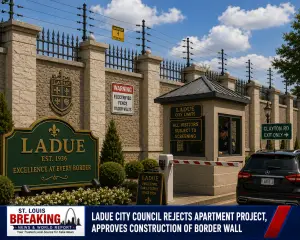
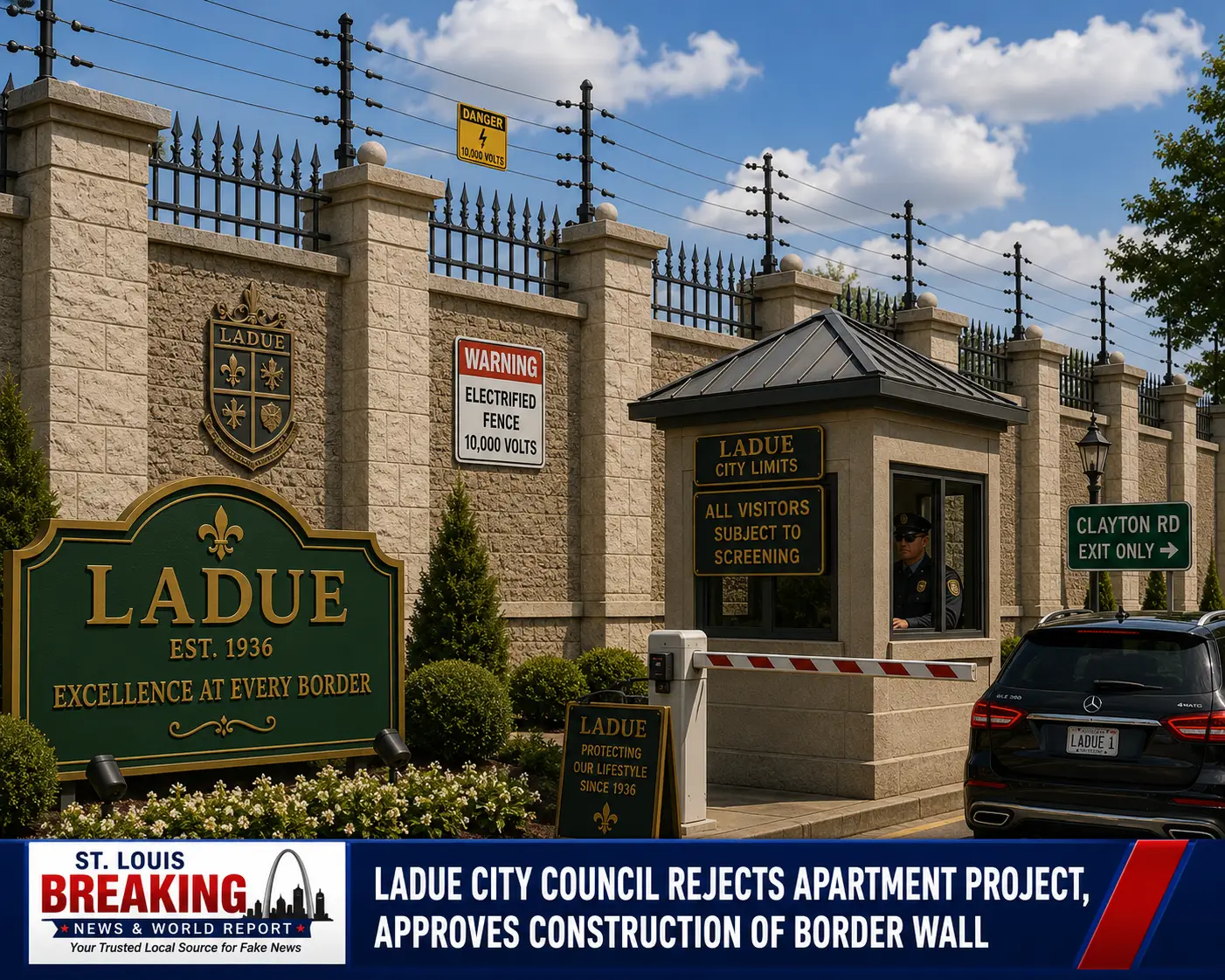
LADUE, MO — Just days after rejecting a controversial mixed-use apartment development along Deer Creek, the Ladue City Council unanimously approved plans Monday evening to construct a state-of-the-art electrified security wall around the city’s entire 8.5-square-mile perimeter “to ensure no apartments accidentally migrate into the community.”
City officials stressed the two votes were “completely unrelated.”
“The wall has absolutely nothing to do with housing,” Mayor Nancy Spewak explained while unveiling architectural renderings featuring wrought-iron gates, decorative limestone columns, and machine-gun nests disguised as tasteful gazebos. “This is simply about preserving Ladue’s unique ecosystem.”
The $187 million barrier will reportedly feature biometric entry gates, license plate readers, and an AI-powered scanner capable of detecting residents of multi-family housing from up to three miles away.
“If you’ve ever renewed a lease instead of refinanced a mortgage, you’ll hear a gentle chime followed by a polite request to turn around,” said the project’s lead engineer. “If you drive a Nissan Altima, however, the voltage increases significantly.”
To avoid accusations of elitism, officials emphasized the wall will welcome all visitors—provided they have dinner reservations, a landscaping contract, or a net worth exceeding the city’s median home value.
Residents praised the proposal.
“I have nothing against apartment dwellers,” said one homeowner. “Some of my favorite service providers live in apartments.”
Another resident expressed relief that the city had finally addressed “the looming threat of someone earning less than seven figures.”
The project also includes a 30-foot observation tower overlooking neighboring municipalities, allowing residents to monitor the spread of “mixed-use developments” before they can cross city limits.
According to planning documents, the wall’s decorative ironwork will spell out the city’s official motto every quarter mile:
“Luxury Is A Human Right.”
At press time, Ladue had announced a second phase of the project that would replace all city-limit signs with passport control booths staffed by volunteers from local homeowners associations.